Four Natural Remedies for Colds
I have been wanting to share these natural remedies for a long time. Many I had known since I was a little girl as they were family recipes passed down for generations. Some I collected over the years as I remembered vividly how I got a bad case of upper respiratory infection in 2016 after a visit to London in the new year that left me coughing for weeks. As the cold and flu season seems to be getting longer and longer, in addition to COVID still affecting many of us, there’s no better time to share all of these in this single blog post.
I also hosted a LIVE cooking show on all these remedies that you could re-watch here.
The four remedies are listed in order of easy to hard, from the perspective of the recipe, as well as the accessibility of the ingredient(s). Do leave me a comment below if you have specific questions. Hope you will give one or a few of these a try!
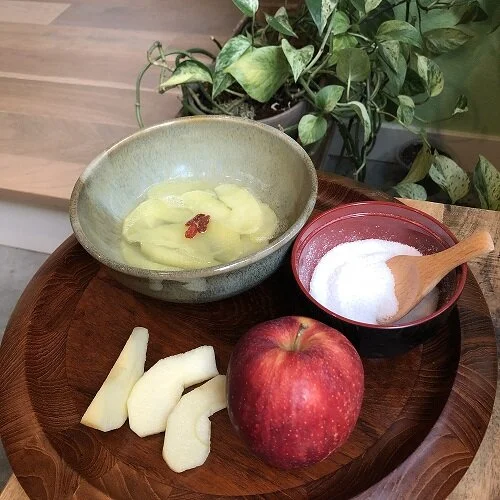
Do this in the microwave to have ready in just a few minutes. Or you could boil it too.
1. Poached Apple in Salt [for cough]
This is the easiest of all the remedies listed on this post, yet it’s one that has been used and loved by my family for generations. Till now, as soon as Baba has a bit of a dry cough, this is the go-to remedy. It’s the main reason why Mama always has apples in the fridge.
Here are the steps:
Peel, core, and thinly slice a small red apple. Place the slices in a microwaveable bowl and add 1/2 to 1 teaspoon of salt with just enough water to cover the apple.
Cover with a plate and microwave for 30 seconds. Turn the slices over and microwave for another 30 seconds. Check to see if the apples are turning translucent. If so, it’s ready. Otherwise, microwave for intervals of 15 seconds until it’s ready.
Eat the apple slices as well as drink all the liquid while it’s hot. It should be quite salty but still enjoyable due to the sweetness from the apple.

Steamed orange with salt makes a wonderfully light (and healthy!) dessert too.
2. Steamed Orange [for cough]
In Traditional Chinese Medicine, it is often said to avoid oranges when you have a cough because it would agitate it. But that is only true if you eat the orange “raw”. Once you steamed it with salt, it has the opposite effect! I learnt this method from multiple sources and enjoyed it so much that I find something wanting to make it as a healthy dessert even when I don’t have a cough because the salt actually brings out the sweetness of the orange.
Here are the steps:
Slightly cut off the bottom of an orange so it can sit flat, but without exposing the flesh of the orange.
Cut off the top, about 1/4 of an orange, to make a lid. Sprinkle a generous pinch of salt (up to 1/2 teaspoon) over the flesh of the orange and put the lid back on.
Steam this over boiling water for 15 minutes. Eat the flesh of the orange once it’s ready.
Make sure you use regular oranges rather than mandarin orange or clementine.
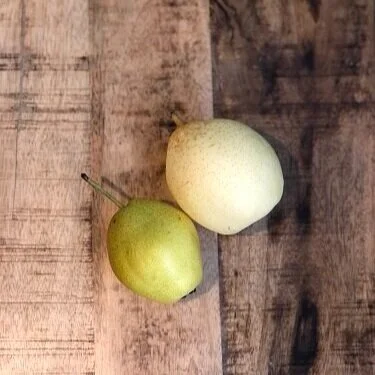
Not all Asian pears are created equal - introducing Fragrant Pear (left) and Ya Pear (right).
3. Chinese Pears [for cough]
As opposed to oranges, these Chinese pears are good for coughs even in raw form. Because there is no cooking involved, this remedy should have been ranked first as it is the easiest to prepare. However, not all pears are created equal. You have to find either the Fragrant Pear 香梨 (small, light green peel, egg-shaped with crisp white flesh) or Ya Pear 鴨梨 (directly translated as Duck Pear because the shape is like a duck’s head, also known as Chinese White Pear). Typically Asian Pears are round in shape and they are not a substitute for these two Chinese pears. In fact, they do more harm than good because they are too “cold” in Traditional Chinese Medicine terms which will agitate your cough. Fragrant and Ya Pears are both seasonal around fall/winter time, perfect for the common cold or flu season. Baba does not like most fruit but he is absolutely in love with Fragrant Pears so he will buy a lot whenever he finds them in the market. Good thing they keep for a long time in the fridge.
Here are the steps:
Make sure the pears are not cold, but room temperature. Wash and leave the skin on. Slice the pear horizontally (from the top to the bottom) and as thinly as you can, about 1/8 of an inch.
Eat and chew each slice slowly and in small bites, avoiding the core. The idea is to let the juice of the pear go down your throat slowly to help calm your cough.
4. Chinese Pear Soup [for cough]
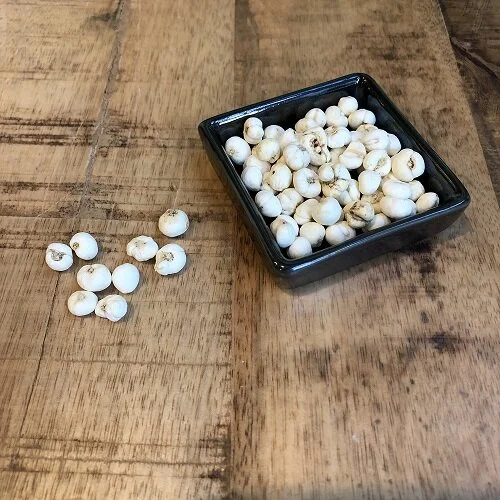
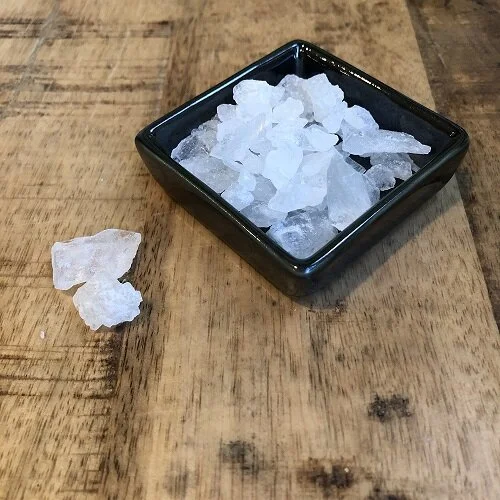
In addition to eating them raw in #3, you can also use the Chinese pears to make a sweet soup to help calm a stubborn cough. This is also Baba’s favorite dessert to make. The key to making a good sweet soup is finding the right sugar: Chinese Rock Sugar. They tend to be more mild with a subtle sweetness which is perfect for the pears. To make it even more effective, add the powerful herb Chuan Bei or Fritillary Bulb to the soup. It is slightly bitter in taste so the sweet pear and sugar can help balance it out.
Here are the steps:
Peel, core, and cut the Fragrant or Ya Pear into bite size. Rinse and drain 1.5 tablespoon of dried Chuan Bei.
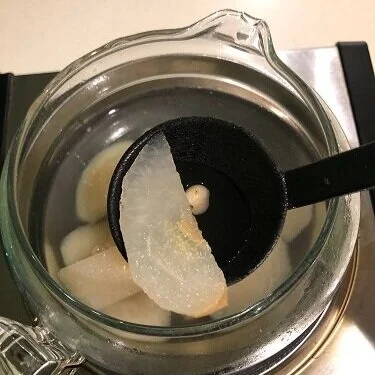
Measure ~3 cups of water in a small pot. Add pear, Chuan Bei, and 2 tablespoon of Rock Sugar into the pot. Cover and bring it to a full boil. Reduce to medium heat and boil until the Chuan Bei are soft and cooked through, between 15 to 30 minutes.
When ready, enjoy the soup while hot and eat the pear and Chuan Bei too for best results. Never drink this soup cold if you have a cough.

Free resources to share Asian food culture. From Chef Elaine Sher, delivered to your inbox.
Subscribe