Lao Whole Duck Feast (Gluten-Free)
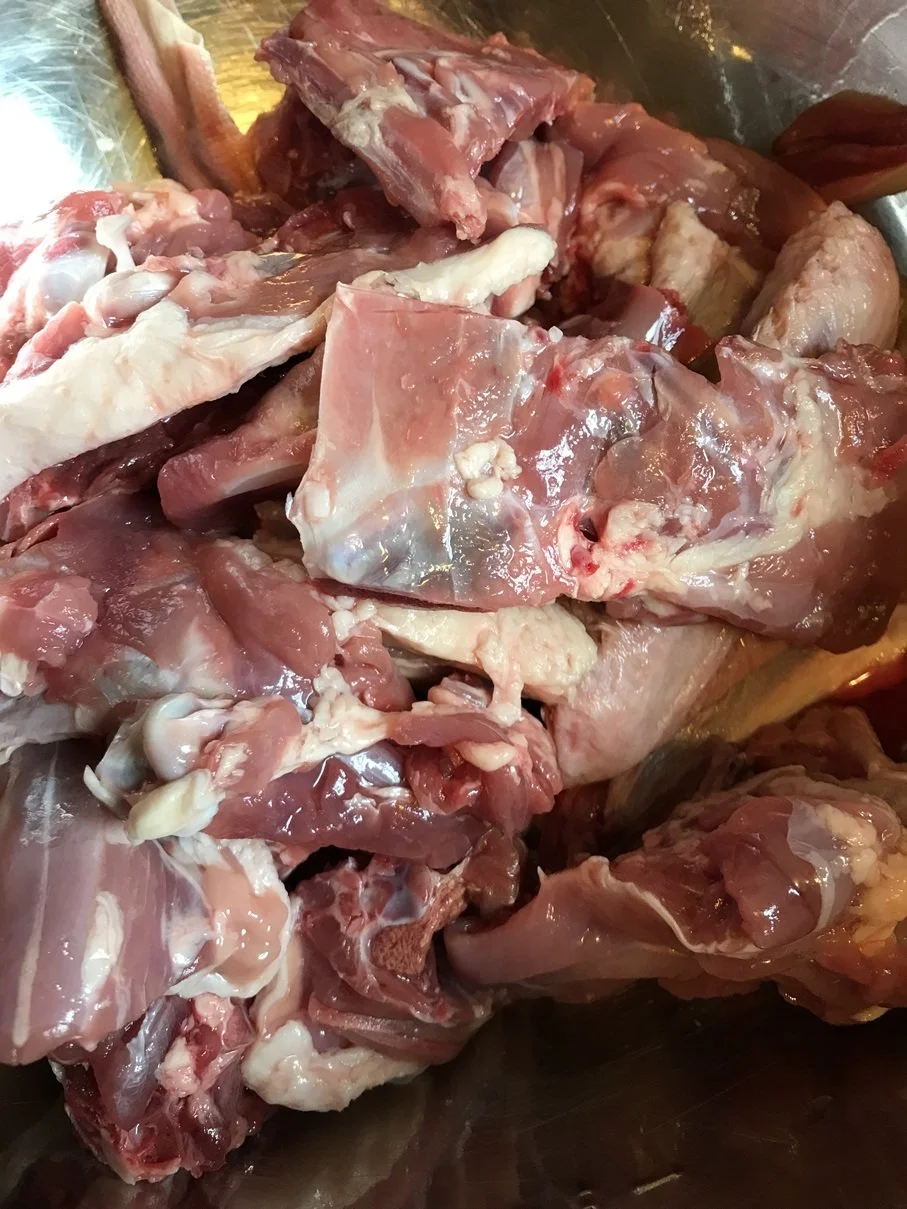
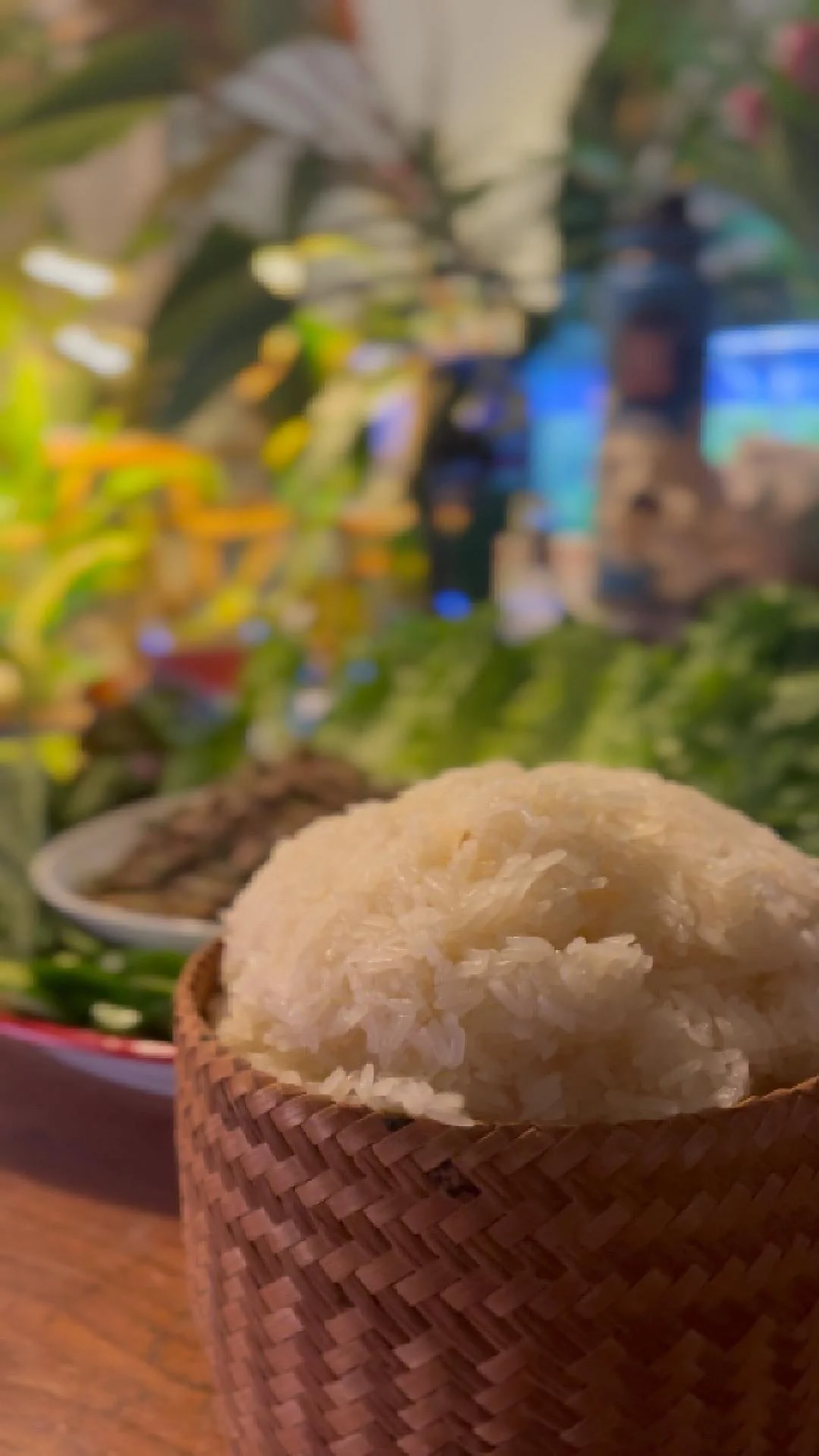
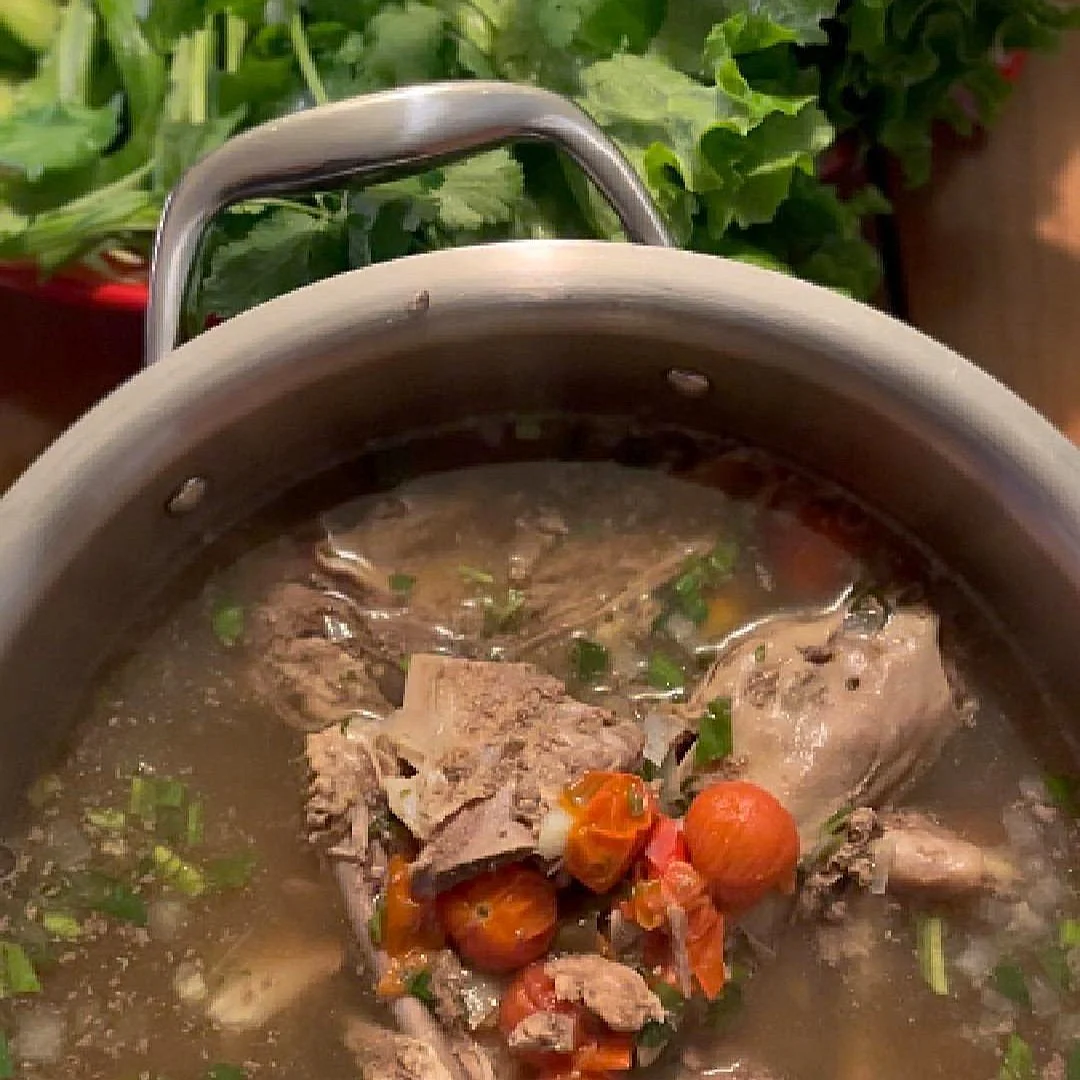
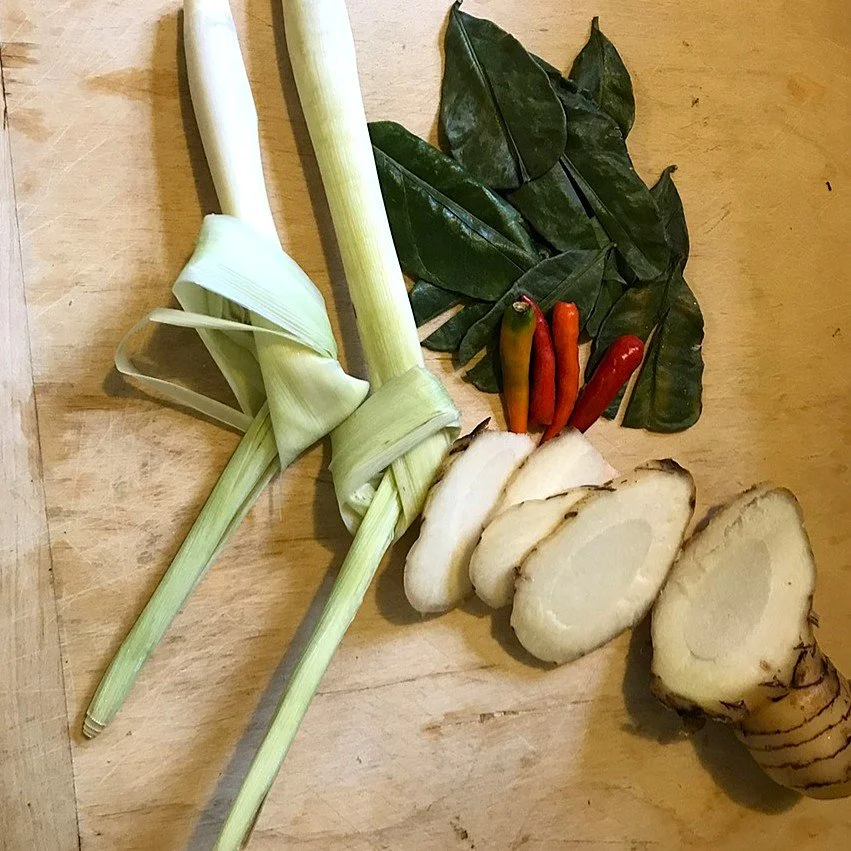
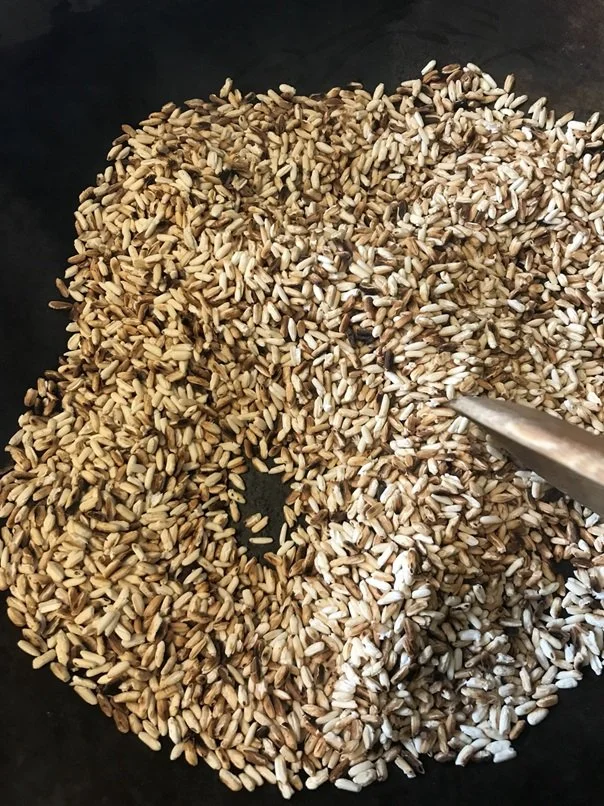
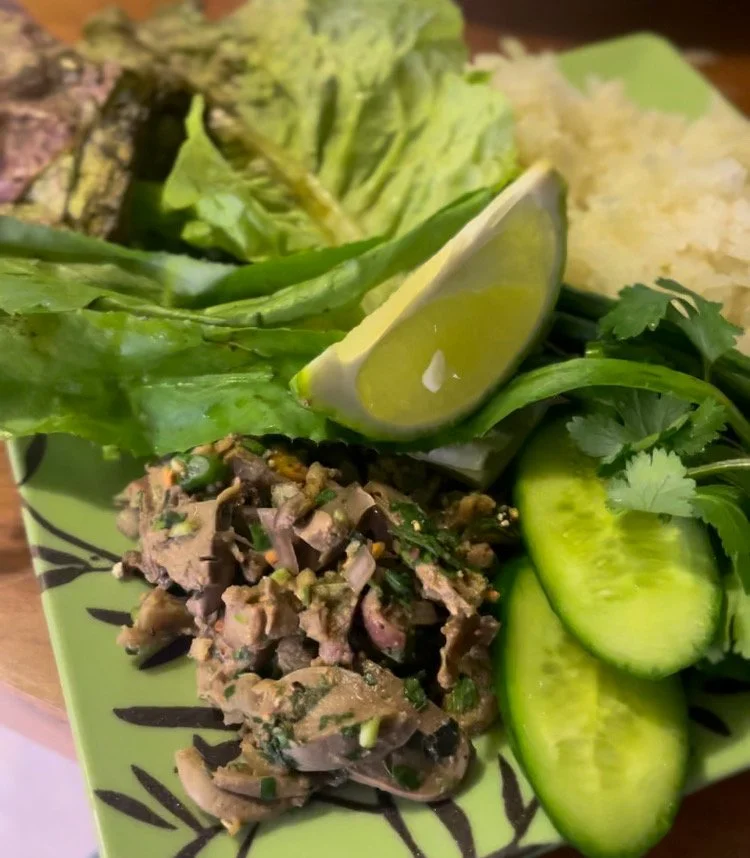
This class starts with one whole duck and ends with four dishes – a true whole duck feast with nothing goes to waste. Chef Soy Dara will show you how to butcher the duck, then use every part across a complete Lao feast. You will begin with Khao Khua, toasted rice powder made by dry-toasting glutinous rice until deep golden brown, then coarsely grinding it — the essential base for laap, a Lao minced meat salad that is considered the national dish of Laos. Then comes Laap Phet, made from the duck breast, leg, organ meats, and rendered skin, minced together with galangal, makrut lime leaves, bird's eye chillies, fish sauce, lime, and fresh herbs. The carcass goes straight into Tom Phet Som, a tamarind duck soup — tom means soup, phet means spicy, som means sour — simmered with lemongrass, galangal, and cherry tomatoes, then brought to the table with fish sauce, lime, and fresh herbs so each person can season their own bowl. Both dishes are served with Khao Niew, glutinous sticky rice steamed in a basket and flipped halfway through so every grain cooks evenly. The meal closes with Sang Kaya Mak Eu, a duck egg and pandan coconut custard poured into a whole kabocha squash and steamed for one hour, then chilled and cut into wedges. The duck egg yolks give the custard a richer set than chicken eggs. All dishes are gluten-free.
New to Lao cuisine? This menu comes from Pi Mai Lao, the Lao New Year, celebrated each year from April 13 to 16 — the hottest days of the year in Southeast Asia, just before the monsoon arrives. Families bought live ducks from local farms to butcher and cook fresh on the day, and laap phet (duck laap) was always on the table because the elders said it brought good luck. In Lao diaspora communities in the U.S., the celebration centered on the local Buddhist temple in the morning, then family and community gathered at home, where the food ran for three days. The whole-duck approach was practical and traditional at the same time: laap from the meat, soup from the bones, dessert from the eggs. Sang kaya mak eu uses fresh pandan leaf extract, which turns the custard soft green and adds a floral fragrance that coconut cream alone does not provide. The whole kabocha squash is both the cooking vessel and the serving vessel — the custard steams inside it for an hour and comes out in wedges, squash and custard in the same bite. Soy grew up cooking this feast for her community, and this class is how she still cooks it.
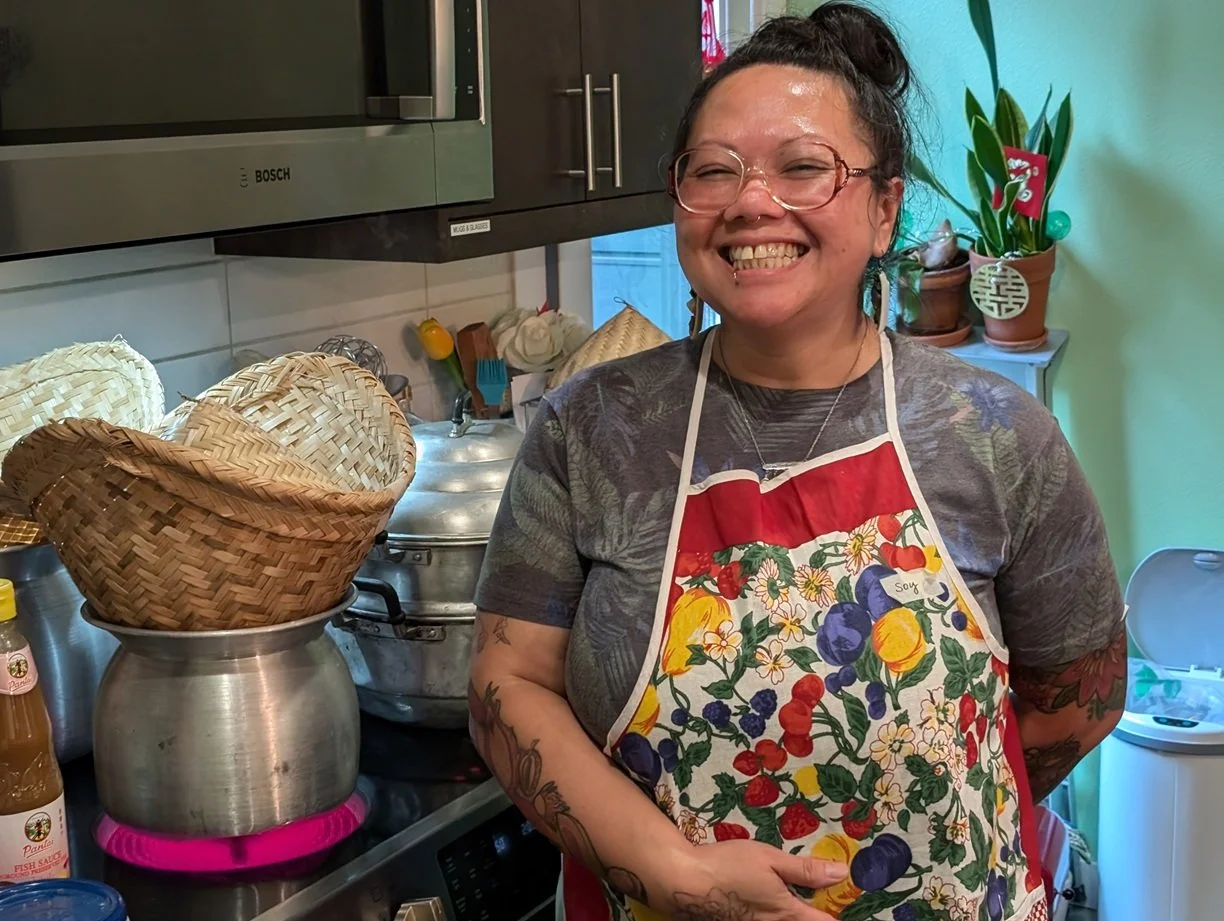

This class is taught by Soy Dara. Soy Dara was born in a refugee camp in northern Thailand, a member of a Lao family fleeing the conflict in their home country. At the age of four she resettled in the United States along with her mother, and stayed connected to Lao culture by cooking for community gatherings and Lao Buddhist Temple events. To this day, Soy loves food for the way it brings people together. Currently, she is a full-time chef at The Pantry, as well as their Kids Programming Coordinator.
Book a class.
New dates are being added all the time. If you don’t see any class dates listed below, pre-register for free so we know what classes to prioritize. You can also book a private event if you have at least 4 people in your group.
All sales are final with no refunds. We need a minimum of 4 students to host a class. If you signed up but we didn’t have enough students, unfortunately we need to reschedule. We will work with you directly to find a new date. Thank you for your understanding.
Here’s the full menu:
Khao Khua (Toasted Rice Powder)
Laap Phet (Minced Duck Salad)
Tom Phet Som (Tamarind Duck Soup)
Khao Niew (Glutinous Sticky Rice)
Sang Kaya Mak Eu (Duck Egg and Pandan Coconut Custard in Kabocha Squash)
During this class, we will prepare and cook from scratch everything on the menu.
Throughout the process, we will pause to introduce new and lesser-known ingredients that are easily found in the greater Seattle area.
The small-class setting means all students are encouraged to ask questions and discuss potential variations for each dish that will make it more accessible and adaptable in everyday cooking.
FAQs
Q: What dishes will I make in this class?
A: You'll make five things from scratch: khao khua (toasted rice powder), laap phet (minced duck salad made from the whole bird including organ meats), tom phet som (tamarind duck soup built from the carcass and bones), khao niew (glutinous sticky rice steamed in a basket), and sang kaya mak eu (duck egg and pandan coconut custard steamed inside a whole kabocha squash).
Q: Is this class gluten-free?
A: Yes. All five dishes are naturally gluten-free. The seasoning is done with fish sauce rather than soy sauce. If you have a severe allergy, confirm with Chef Soy before the class.
Q: Do I need to know how to butcher a duck?
A: No prior butchering experience is needed. Breaking down the whole duck is the first thing you will do in class, and Chef Soy will walk everyone through it step by step. That's the point — you'll leave knowing how to do it yourself at home.
Q: What is laap phet?
A:Laap phet is a Lao minced duck salad and one of the most important dishes in Lao cooking. Laap is the national dish of Laos — minced meat dressed with fish sauce, lime juice, and khao khua (toasted rice powder). Phet means duck. In this class the laap is made from the breast, leg, organ meats, and rendered skin of the whole duck, mixed with galangal, makrut lime leaves, bird's eye chillies, and fresh herbs including mint, rau ram, cilantro, culantro, and scallions.
Q: What is khao khua and why does it matter?
A:Khao khua is toasted rice powder made by dry-toasting raw glutinous rice in a pan over medium heat for 15 to 25 minutes until it turns deep golden brown, then coarsely grinding it in a spice grinder. It goes into every laap and is what gives the salad its texture — nutty, slightly smoky, and binding. You cannot substitute it with store-bought rice powder or skip it. Lao cooks make it fresh every time, and you will too.
Q: What is tom phet som?
A:Tom phet som is a Lao duck soup — tom means soup, phet means spicy, som means sour. It is made from the duck carcass and bones left after the laap is prepared, simmered with lemongrass, galangal, makrut lime leaves, tamarind paste, whole Thai chillies, sweet onion, and cherry tomatoes. Tamarind is what makes this soup distinct — it gives the broth a sourness that balances the richness of the duck. Each bowl is brought to the table and seasoned individually with fish sauce, lime, cilantro, scallions, and culantro.
Q: What is sang kaya mak eu?
A:Sang kaya mak eu is a Lao coconut custard steamed inside a whole kabocha squash. The custard is made from duck eggs, coconut cream, palm sugar, and fresh pandan leaf extract — the pandan turns it soft green and adds a floral fragrance. The hollowed squash holds the raw custard mixture and goes into the steamer whole for one hour. It is chilled before serving and cut into wedges so each piece has squash and custard together. Duck eggs give it a richer, denser set than chicken eggs.
Q: What is khao niew?
A:Khao niew is Lao glutinous sticky rice. It is not the same as jasmine or long-grain rice and cannot be cooked the same way. The rice is soaked for at least four hours first so the starch hydrates evenly, then steamed upright in a cheesecloth-lined basket and flipped halfway through so the top grain moves to the bottom and every grain cooks through. It is soft, slightly chewy, and pulled apart in small handfuls rather than scooped. It is the traditional accompaniment to laap and Lao soups.
Q: Who teaches this class?
A: This class is taught by Chef Soy Dara (@cooking_with_soy on Instagram). Soy Dara was born in a refugee camp in northern Thailand and resettled in the United States at age four. She has cooked Lao food for community gatherings and Lao Buddhist Temple events throughout her life. She is currently a full-time chef at The Pantry in Seattle and their Kids Programming Coordinator. Her other Lao cooking classes at Dash of Soy include Street Foods of Laos and Homemade Lao Noodle Soups.
Q: Where is this class held?
A: The class is held at Dash of Soy Culinary School, located at 6726B Corson Ave S, Seattle, WA 98108. Street parking is free.
Q: What skill level is required?
A: No prior experience with Lao cooking is needed. You should be comfortable in a kitchen. The class covers butchering, multiple cooking techniques, and a steamed dessert, so there is a lot happening — but the small class size means Chef Soy works closely with each student throughout.
Q: Can I buy the specialty ingredients in Seattle?
A: Yes. All ingredients are available at Seattle-area Asian grocery stores. Mekong Rainier (3400 Rainier Ave S) carries everything you need. Other options include Vientiane Grocery (3828 S Graham St), Seattle Super Market (4801 Beacon Ave S), Uwajimaya (International District or Bellevue), H-Mart, and 99 Ranch Market in Kent or Edmonds.